
Posted on Leave a comment

25 Questions Your Website Should Answer Better Than AI

25 Questions Your Website Should Answer Better Than AI

25 Questions Your Website Should Answer Better Than AI

In 2026, your website is not competing only with other websites. It is also competing with AI answers, zero click summaries, and people who want quick decisions. That is why your site must do one thing clearly.

It must answer the questions your buyers are already thinking, in a way that feels real, specific, and trustworthy.

AI can explain marketing concepts. But it cannot explain your exact process, your exact offer, your exact results, your timelines, your pricing logic, and why you are a safe choice. That is your advantage.

This blog is a ready list of 25 website questions that help you turn visitors into leads. If you answer these properly, you will get more enquiries, better quality calls, and less back and forth on WhatsApp and email.

These questions work for service businesses, coaches, agencies, SaaS, and local brands. If you run a business website and you want growth, start here.

1. Who is this for, and who is it not for

Your website should clearly say who you help, and what kind of client is a poor fit. This builds trust because it shows you have standards. It also improves lead quality because wrong people will self filter. Add a simple example like, “Best for founders who want leads in 90 days, not for people looking for one post design.”

2. What problem do you solve in one line

Most websites talk about services. Buyers care about outcomes. Write one clear line that connects your service with a result, like more enquiries, better conversions, or stronger brand trust. Keep it specific and easy to understand.

3. What is your main offer, and what exactly is included

People leave websites when they are confused. Your offer page should list what they get, how many deliverables, what platforms, what timeline, and what support. If you offer packages, show what changes from one package to another.

4. What results can I expect, and how long does it usually take

Avoid fake promises. Instead, set realistic expectations. Explain what results depend on, like budget, market, existing content, or website quality. Add a simple timeline like, “Week 1 setup, week 2 launch, week 3 optimisation, month 2 scaling.”

5. What makes you different from others doing the same thing

Do not say “we are best” or “we are creative.” Say your real differentiator. Maybe you do strategy first, maybe you focus on conversion not vanity metrics, maybe you give weekly reporting, maybe you have a clean content system. One strong differentiator is better than five weak ones.

6. What is your process, step by step

A website should reduce fear. Buyers want to know what happens after they pay. Add a simple process like discovery, strategy, execution, review, reporting, optimisation. People trust you more when they can see the journey.

7. What do you need from me to start

This saves a lot of time. Mention what you need, like brand access, website access, past performance data, product details, offers, and target location. It also shows you are organised and professional.

8. How do you measure success

Many clients have different ideas of success. Your site should define it. For example, for ads it can be cost per lead and conversion rate, for SEO it can be impressions and keyword growth, for content it can be enquiries and profile visits. Clear success metrics reduce misunderstandings later.

9. What does a good lead look like for your business

This question is gold for agencies and consultants. If you define a good lead, you can build the right funnel. Add examples like, “A good lead is a founder with a clear offer, ready to invest for growth, and willing to follow a plan.”

10. Why is my marketing not working right now

Your website should educate without blaming the visitor. Common reasons include weak offer, unclear messaging, inconsistent posting, poor website conversion, wrong targeting, or no follow up system. A short section like this builds authority and makes people think, “They understand my situation.”

11. Do I need SEO, ads, or social media first

Most businesses waste money because they pick the wrong first step. Your site can guide them. For example, ads work faster when the offer and landing page are strong. SEO works best when you can publish consistently. Social works best when content has clear positioning and CTA.

12. What is the best marketing channel for my industry

You can answer this with simple direction. Coaches may do best on Instagram and LinkedIn. Local businesses may do best with Google Business Profile and local SEO. Ecommerce may need performance ads and email flows. If you explain this clearly, the reader feels helped, not sold.

13. What will you do in the first 7 days

This is a trust question. People want quick clarity. Tell them what you do first, like audit, strategy, tracking setup, content plan, creative direction, landing page fixes, and reporting setup. Even if results take time, action builds confidence.

14. How do you create content that actually brings enquiries

Most content gets likes but no leads. Explain your approach simply, hook, value, proof, CTA, and repetition. Show that content is not random posting, it is a system. This is where Kodo Kompany style content planning can be highlighted as a “content engine.”

15. What should I put on my homepage to convert more visitors

Many homepages are just pretty. A converting homepage has a clear headline, a simple offer, proof, key services, process, case studies, and one strong CTA. If you teach this, you instantly become a trusted guide.

16. Do I need a landing page, or can I run ads to my homepage

If you run ads to a homepage, visitors often get lost. A landing page is focused, with one goal. Explain this clearly and people will understand why a landing page increases conversion. This also reduces objections when you recommend website improvements.

17. How much does marketing cost, and what affects pricing

People are thinking about money even if they do not ask. You do not need to put exact pricing if you do not want to, but you should explain what affects it. For example, ad spend, number of platforms, creative volume, reporting, and complexity. This makes pricing feel fair, not random.

18. What is included in ongoing support, and how communication works

Clients want to know how often they will hear from you. Add details like weekly updates, monthly review calls, WhatsApp support hours, and turnaround times. Clarity reduces anxiety and improves retention.

19. Can you show proof, case studies, or real examples

Proof removes doubt. Add before after examples, screenshots, brand stories, and mini case studies. Even if you cannot share full numbers, show outcomes like growth, consistency, lead volume, or process improvements.

20. What happens if results are slow in the beginning

This question builds trust because it shows maturity. Explain that early phases involve learning, testing, creative iteration, and data collection. Then optimisation improves performance. This makes clients patient and realistic.

21. What are the most common mistakes businesses make in 2026 marketing

Give a helpful list in paragraph form. Common mistakes include copying competitors, chasing trends without strategy, not tracking leads, not improving the website, weak follow up, and inconsistent content. When you call these out, you position yourself as a real partner.

22. How do you handle brand voice and creative direction

Brands worry that agencies will post generic content. Explain how you capture tone, visuals, messaging pillars, and do approvals. Mention moodboards, references, and content guidelines. This is a strong trust signal for creative services.

23. Do you work with small businesses, and will it still work for me

Many people feel they are “too small.” Your website should reassure them with a clear approach, focus on fundamentals, offer clarity, consistent content, and simple lead gen. Explain that small brands win by being clear, not by being loud.

24. What should I prepare before booking a call

This improves call quality. Ask them to prepare their offer, target audience, past results, budget range, and what success looks like. It also makes you look structured and serious.

25. What is the next step, and how do I contact you

This is where many websites fail. Make the CTA simple. One strong primary action is best, like “Book a strategy call,” or “Get a free audit,” or “Request a plan.” Also tell them what happens after they submit the form, so they feel safe taking action.

How to use these 25 questions on your website

Do not put all 25 on one page in a messy way. Use them smartly.

Put 6 to 8 key answers on your homepage.
Put deeper answers on service pages and pricing pages.
Create a dedicated FAQ or Help page for high intent questions.
Turn a few questions into blog posts, because each good answer can become a traffic page.

This is exactly how strong websites become “decision-friendly” in 2026.

Final note from Kodo Kompany

Your website should not be a brochure. It should be your best salesperson. When your site answers the right questions, people trust you faster. They enquire faster. And they buy with less hesitation.

If you want, Kodo Kompany can help you turn your current website into a simple, high trust, high conversion system using content, SEO, landing pages, and lead gen workflows.
Posted on Leave a comment

Local SEO in 2025: 12-Step Playbook for Small Businesses

Local SEO in 2025: 12-Step Playbook for Small Businesses

Local SEO in 2025: 12-Step Playbook for Small Businesses

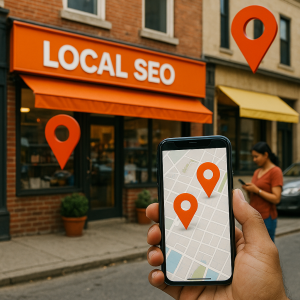
If you run a local business in 2025, your Google presence is your new shopfront.

Before anyone walks into your store, clinic, office or café, they are most likely doing one of these:

  • Typing “near me” on their phone

  • Checking Google Maps reviews

  • Comparing 2–3 options on the first screen of results


If you do not show up there, you are invisible. The good news: you do not need a massive budget to compete. You need a clear local SEO playbook and the discipline to execute it consistently.

Local SEO in 2025: 12-Step Playbook for Small Businesses

This guide from Kodo Kompany breaks local SEO into 12 practical steps you can actually follow. No jargon, no magic secrets. Just what small businesses need to do to show up, stand out and get chosen in local search in 2025.

Step 1: Fix Your NAP Everywhere (Name, Address, Phone)

Local SEO starts with one simple idea: Google needs to trust your basic details.

Make sure your:

  • Business name

  • Full address

  • Phone number

  • Website URL

are written the same way across:

  • Your website

  • Google Business Profile

  • Facebook page

  • Instagram bio

  • Local directories (Justdial, Sulekha, IndiaMART, etc.)

Even small differences (Suite vs Ste, Rd vs Road, different phone numbers) can create confusion. Start by deciding one standard format and then updating it everywhere.

Step 2: Fully Set Up and Optimise Your Google Business Profile

For local SEO in 2025, your Google Business Profile (GBP) is almost more important than your home page.

Most people will see:

  • Your star rating

  • Your photos

  • Your opening hours

  • Your location on Maps

  • A few top reviews

before they ever click on your site.

Make sure you:

  • Choose the correct primary category (for example “Dental clinic” instead of just “Clinic”)

  • Add secondary categories where relevant

  • Write a clear description that explains what you do and who you serve

  • Add your services or products with short descriptions

  • Set correct hours (including holiday hours)

  • Add high-quality photos of your exterior, interior, team, products or services

Keep this profile updated like you would update your shop board in the real world.

Step 3: Use Local Keywords the Way People Actually Search

Your customers are not searching for “cutting edge omni-channel service providers”. They are searching for things like:

  • “best dentist in noida extension”

  • “2bhk flat broker in greater noida west”

  • “social media agency in pune for startups”

Make a list of:

  • Your main service

  • Your city

  • Your neighbourhood or area

  • “Near me” phrases you would personally type

Examples:

  • “pet clinic in andheri west”

  • “home tutor in dwarka sector 7”

  • “marketing agency for real estate in noida”

Use these local phrases naturally in:

  • Page titles and meta descriptions

  • H1 and H2 headings

  • Service page content

  • Image alt text

  • FAQ sections

Write for humans first, then check if the important local phrases are present.

Step 4: Create a Strong “Local Hero” Homepage

Your homepage should answer one key question:

“Is this the right place for someone like me, in my area, with my problem?”

Make sure it clearly mentions:

  • What you do (in plain language)

  • Where you operate (city, locality, service area)

  • Who you serve (families, startups, working professionals, etc.)

Add:

  • A short introduction about your business

  • A “Why choose us in [location]” section

  • 3–5 key services with links to detailed pages

  • A clear “Call now”, “WhatsApp now” or “Book a visit” button

Think of your homepage as your main local landing page.

Step 5: Build Dedicated Local Service Pages

If you offer multiple services or cover multiple areas, one generic page is not enough.

Create specific pages such as:

  • “Teeth Whitening in Indirapuram”

  • “2BHK Flat Purchase Consultancy in Noida Extension”

  • “Social Media Management Agency in Pune for Coaches”

On each page:

  • Explain the service in detail

  • Emphasise why it works well for people in that location

  • Mention local landmarks or common pain points (parking, commute, nearby hubs)

  • Add testimonials or case studies from customers in that area

These pages give Google and users clear, focused answers, which helps you show up for more targeted local searches.

Step 6: Make Your Contact and Location Info Obvious

Do not make visitors hunt for your address or phone.

On every page, make sure:

  • Your phone number is clickable on mobile

  • Your address is easy to see

  • Your Google Maps link or embedded map is present on the Contact page

  • You have clear directions if your location is tricky

For example:

  • “5 minutes walk from [metro station]”

  • “Opposite [known building or landmark]”

This helps both users and Google better understand and trust your location.

Step 7: Actively Collect and Respond to Reviews

In local SEO, reviews are your currency.

A business with 4.5 stars and 120 reviews will almost always win attention over a 5-star business with 5 reviews.

Build a simple system:

  • Ask happy customers to leave a review on Google

  • Provide a direct review link via WhatsApp or SMS

  • Train your staff to request reviews politely at the right time

  • Respond to every review, good or bad, with calm, helpful language

Quick guidelines:

  • Never offer money for reviews

  • Avoid writing fake reviews yourself

  • Use reviews to highlight specific services you want to rank for

Example of a reply to a positive review:

“Thank you for trusting us with your [service]. We are glad you liked the experience. Hope to see you again at our [location] clinic.”

Step 8: Publish Helpful Local Content, Not Just Promotions

Local SEO is not only about your profile and address. Content still matters.

Ideas for local content:

  • “How to choose a [service] provider in [city]”

  • “5 mistakes first-time home buyers make in [area]”

  • “Best schools, gyms, or amenities near [your locality]”

  • “Checklist before booking a [service] in [city]”

This type of content:

  • Helps you answer real questions your audience is searching

  • Builds trust in your expertise

  • Gives more opportunities to rank for long-tail local queries

Keep the language simple and educational. Imagine you are explaining things to a neighbour over a cup of tea.

Step 9: Get Listed in the Right Local Directories and Partner Sites

Local citations (mentions of your business name, address and phone number) are still useful in 2025 when they are relevant and consistent.

Focus on:

  • Major Indian platforms: Justdial, Sulekha, IndiaMART (if relevant)

  • Industry-specific directories: healthcare, education, real estate, legal, etc.

  • Local association sites: chamber of commerce, trade groups

Make sure your NAP details match exactly. These listings help reinforce your local presence for both search engines and users.

Step 10: Use Social Media to Strengthen Local Signals

Social media is not a direct ranking factor, but it strongly influences local visibility and trust.

Things that help:

  • Mention your city and locality in bios and captions where relevant

  • Share photos and stories of real customers (with consent)

  • Use location tags for posts and stories

  • Talk about local events, festivals or collaborations

This sends clear signals that you are active and embedded in the local community. When someone sees you on Instagram and then searches on Google, everything connects.

Step 11: Track What Is Working (and What Is Not)

You cannot improve what you do not measure.

At a basic level, track:

  • How many calls and website visits come from your Google Business Profile

  • Which queries people use to find you (look into GBP and Google Search Console data)

  • Which pages get the most local traffic

  • How many leads or walk-ins mention “I found you on Google / Maps”

Use this information to decide:

  • Which service pages to expand

  • Which local keywords to double down on

  • Whether you need more reviews, better photos, or clearer content

Even small improvements each month compound over time.

Step 12: Answer Common Local Questions Clearly on Your Site

People search with questions:

  • “Is [business] open on Sunday?”

  • “Do they have parking?”

  • “Do they offer home visits in [area]?”

  • “What is the consultation fee?”

Create an FAQ section on your main local pages and answer these clearly.

Examples:

  • “Do you provide services in [nearby locality]?”

  • “What are your timings on weekends?”

  • “Do I need to book an appointment or can I walk in?”

Short, direct answers help both your visitors and search engines understand your business better. They also increase your chance of showing up when someone types these questions into Google or asks them via voice search.

FAQs: Local SEO for Small Businesses in 2025

1. How long does local SEO take for a small business?
Local SEO is not instant, but many small businesses see visible improvements in 3–6 months if they are consistent with Google Business Profile optimisation, reviews, basic on-page SEO and local content. It is an ongoing process, not a one-time project.

2. Is Google Business Profile enough for local SEO in 2025?
Google Business Profile is essential, but it is not enough on its own. You still need a clear website, consistent NAP, local-focused content, reviews and basic technical hygiene. Think of GBP as your front door and your website as the full house tour.

3. Do I need a blog to rank locally?
You can rank for very basic local searches without a blog, but having useful local content helps you reach more specific questions and higher-intent users. Even one or two good local guides or FAQs per quarter can make a difference over time.

4. How important are reviews for local SEO?
Reviews are extremely important in local SEO, both for ranking and for conversions. A strong review profile with honest, recent feedback often decides whether someone chooses you or a competitor, even if both show up on the same screen.

5. Can a small business do local SEO without an agency?
Yes, you can start on your own by following a simple checklist: optimise your Google Business Profile, fix NAP consistency, collect reviews, build a solid homepage and a few service pages, and write basic local FAQs. An agency like Kodo Kompany becomes useful when you want to scale this, track performance, and integrate local SEO with ads, content and overall marketing.