Google Search Console Launches Branded Queries Filter for Easier Traffic Segmentation
Quick answer:Google Search Console now lets eligible sites separate branded and non branded search traffic directly inside the Performance report. Google says the feature automatically classifies branded and non branded queries, is available across Web, Image, Video, and News search types for eligible properties, and also appears in Search Console Insights to help compare brand recognition with brand discovery.
For years, SEO teams had to do this the hard way.
If you wanted to know how much of your Google traffic came from people already searching for your brand versus people discovering you through broader topics, you usually had to build messy regex filters, maintain keyword lists, or export the data somewhere else.
Now Google Search Console is making that easier.
Google has introduced a branded queries filter inside Search Console, giving eligible websites a native way to split branded and non branded traffic inside the Performance report. Google says the feature automatically differentiates between branded and non branded queries, and Search Engine Land reported that the rollout is gradual and only available for eligible sites with enough data volume.
For brands, agencies, and SEO teams in India, this is a very practical update because it removes a lot of manual filtering work and makes traffic segmentation easier to explain to clients and internal stakeholders.
What is the new branded queries filter in Google Search Console?
Google describes the branded queries filter as a new tool inside the Search Console Performance report that helps site owners analyze the queries driving traffic by automatically distinguishing between branded and non branded queries. Google also says the feature is available for eligible sites and works across Web, Image, Video, and News search types.
In simple terms, this means you can now see:
how much traffic is coming from people who already know your brand, how much traffic is coming from broader discovery searches, and how those two groups perform differently on impressions, clicks, and CTR.
That makes it easier to answer an important SEO question:
Are we growing because more people already know our brand, or because we are improving topic based visibility?
Why this Google Search Console update matters for SEO
This update matters because branded traffic and non branded traffic tell very different stories.
Branded traffic usually reflects:
brand demand, brand recall, repeat awareness, offline and social influence feeding search.
Non branded traffic usually reflects:
SEO visibility, content discoverability, ranking strength on category and topic terms, new audience discovery.
When both are mixed together, it is easy to misread performance.
For example:
a site may look like it is growing strongly in Search Console, but most of that growth may be from people already searching the company name.
Or the opposite may happen:
brand search may be flat, while non branded visibility is actually growing well.
That is why this feature is useful for agencies and in house SEO teams. It gives cleaner reporting without the old manual work.
What Google says about how it works
Google says the system uses an internal AI assisted method to automatically categorize queries into branded and non branded groups. Search Engine Land also reported that Google can now show this split in reporting and that the feature is rolling out gradually.
Google also says Search Console Insights includes a new visual card to compare brand recognition and brand discovery, which adds another layer for easier analysis.
This is important because it means the feature is not just a filter for power users inside the Performance report. It is also becoming part of how Google visually frames search performance inside Insights.
What marketers and agencies can do with it
For digital marketing teams, this is more than a reporting convenience.
It helps with better decision making.
You can now use the branded filter to:
separate brand demand from SEO discovery, show clients clearer growth stories, audit whether content is actually bringing in new searchers, measure how campaigns affect branded search interest, compare CTR patterns between brand and non brand queries.
For agencies like Kodo Kompany, this is especially useful in monthly reporting because it helps answer questions clients often ask:
Are people finding us because of SEO or because they already know us? Is our content strategy improving non branded discovery? Are brand campaigns influencing organic branded clicks?
How Indian brands can use this update better
For businesses in India, especially growing brands in cities like Pune, Mumbai, Delhi, Bengaluru, Hyderabad, and Ahmedabad, this feature can be useful in a few practical ways.
If you are a local service brand, branded traffic can show whether awareness campaigns are working.
If you are an ecommerce or D2C brand, non branded traffic can show whether category pages and blogs are improving discovery.
If you are a B2B business, the split can help you understand whether your SEO is expanding beyond people who already know the company.
This matters because many Indian businesses still mix brand led growth with SEO led growth in reporting. That can make decision making weak. A native branded filter gives a cleaner view.
A few things to keep in mind
This feature is not available to every site.
Google says it is available only for eligible sites, which means your property needs enough data volume for the system to support the filter.
It is also worth remembering that:
Google is classifying the queries automatically, so you may still want to sense check how the split looks for your brand, especially if your brand name overlaps with common words or product terms.
Still, for most sites, this should be much easier than building and maintaining manual regex logic.
What this means for reporting in 2026
This update is part of a broader direction inside Search Console.
Google launched Query groups in Search Console Insights in October 2025, and then followed it with the branded queries filter in November 2025. That shows Google is putting more focus on query segmentation and easier interpretation of search performance.
For SEO reporting in 2026, that means cleaner conversations around:
brand growth, topic growth, search discovery, and content impact.
Instead of saying organic traffic is up, marketers can now more clearly explain why it is up.
Final thought
This is one of those Google Search Console updates that is not flashy, but very useful.
It saves time. It improves reporting clarity. And it helps teams separate brand awareness from SEO discovery without relying so heavily on manual work.
For businesses and agencies, that means better decisions and better storytelling from the same search data.
FAQs
What is the branded queries filter in Google Search Console?
It is a new Search Console feature that lets eligible sites separate branded and non branded search traffic directly inside the Performance report.
Does Google Search Console automatically classify branded queries?
Yes. Google says it uses an internal AI assisted system to automatically differentiate branded and non branded queries.
Is the branded queries filter available for all websites?
No. Google says it is available for eligible sites, which generally means properties with enough data volume.
Why is branded vs non branded traffic important for SEO?
Because branded traffic usually reflects brand awareness, while non branded traffic reflects topic visibility and search discovery. Separating them gives a clearer picture of what is really driving organic growth.
WordPress Updates Its AI Guidelines to Fight “AI Slop”
What it means for brands, marketers, and agencies using WordPress in 2026
WordPress just made something very clear. AI is allowed, but lazy AI is not.
In early February 2026, the WordPress AI team published official AI usage guidelines to encourage responsible use and to reduce low quality content and low quality contributions across the ecosystem. The headline message is simple: you are responsible for what you publish or submit, even if AI helped you. WordPress also asks contributors to disclose meaningful AI assistance, and to keep everything compatible with GPL licensing rules, including code and non code assets like documentation, images, screenshots, and educational content.
This matters even if you are not contributing to WordPress core. Because WordPress powers a massive share of business websites, the standard it sets becomes a signal for how the web is going to treat content quality in the AI era. If your brand is publishing blogs, landing pages, knowledge bases, or even micro content at scale using AI, this update is a warning and a blueprint.
This blog breaks down what WordPress changed, why it changed, and what brands should do next if they want trust, rankings, and conversions in 2026.
Why WordPress released these AI guidelines now
AI tools are now everywhere in content and development workflows. That is not the problem. The problem is what happens when AI becomes the whole workflow.
WordPress calls out thhttp://WordPress AI Guidelines (Make WordPress): https://make.wordpress.org/ai/handbook/ai-guidelines/e risk of low effort, unverified AI output that floods the internet and reduces overall quality. Many publishers are pushing volume, not value. That creates “AI slop” content that looks fine at first glance, but fails on accuracy, originality, real world usefulness, and trust. Search platforms and users are already reacting to this.
WordPress is basically saying: quality standards do not change just because AI exists. If your work is low effort, it should be rejected, whether it came from a person or a machine.
The 5 biggest takeaways from the WordPress AI guidelines
Let us translate the official guidance into plain English.
1. You must own the output
WordPress says you are responsible for your contributions. AI can assist, but it is not a contributor. That means you cannot blame AI for bad code, wrong facts, or misleading claims.
For brands, this is the most important principle. If AI wrote your blog draft and it includes incorrect information, your brand still loses trust.
2. Disclose meaningful AI assistance
WordPress asks contributors to disclose meaningful AI assistance in the PR description or ticket comment. It also clarifies that small trivial help may not need disclosure, but meaningful help should be disclosed.
For brands, the lesson is not “add an AI disclaimer everywhere.” The lesson is to build internal transparency. Track where AI meaningfully shaped content, code, claims, or visuals, so you can audit, fix, and improve fast.
3. Licensing still matters, including AI output
WordPress contributions must remain compatible with GPLv2 or later, including AI assisted output. This is important because some AI tools may produce code that is not safe to relicense, or may repeat patterns from sources with different licenses. WordPress is reminding everyone that “AI generated” does not automatically mean “free to use.”
For business sites, licensing issues show up in plugins, themes, snippets, and assets pulled into your site. If your team is using AI to generate code for plugins, you need a clean policy.
4. Non code assets also count
WordPress explicitly includes docs, screenshots, images, and educational materials. In other words, it is not just about code.
For brands, this is huge. Because most “AI slop” is not code. It is content, visuals, and low effort templates.
5. Choose quality over volume
WordPress pushes quality over volume and discourages low effort output.
This is also the direction SEO is already moving towards. Helpful, original, experience based content wins. Mass produced content without depth slowly loses rankings and conversions, even if it briefly spikes traffic.
What this means for SEO and brand trust in 2026
Even though WordPress guidelines are written for contributors, the impact is wider. Here is the real message for marketers.
If you want visibility in Google, in AI answers, and in human decision making, you have to earn trust. Trust is built by clarity, accuracy, helpful structure, proof, and consistent quality.
AI can speed up the first draft. But it cannot replace real expertise, real examples, and real editing. When AI writes alone, you usually get the same generic advice that everyone else is publishing. That is exactly what search engines and users ignore.
So the winning play is: use AI like a smart assistant, not like a ghostwriter.
A practical “responsible AI” workflow for WordPress brands
Here is a simple workflow we recommend at Kodo Kompany for brands that publish content regularly and use AI tools.
Step 1. Start with a human brief
Before you open any AI tool, write a short brief that includes:
Audience and intent What problem this page solves What you want the reader to do next What experience, proof, or examples you will include
This keeps the content unique from the beginning.
Step 2. Use AI for speed, not authority
AI is great for:
Outlines Headline variations Simplifying language Generating FAQ drafts Summarising your own notes Formatting content for readability
AI should not be your source of truth. If it makes a claim, you verify it.
Step 3. Add “brand reality” to every piece
To avoid generic content, add at least two of these:
A real example from your work A mini case story A common mistake you see in clients A short checklist based on your process A simple framework with your naming
This is what makes your content worth reading and worth citing.
Step 4. Do a trust edit
Before publishing, run a final edit focused on:
Are claims accurate Is it easy to skim Does it answer the exact query clearly Is the CTA clear Is it written like a human, not like a bot
If the content feels “same same,” rewrite the intro and add a sharper point of view.
Step 5. Keep an internal AI usage note
You do not need to publish a dramatic disclaimer on every blog. But you should track meaningful AI help internally, especially when AI produced:
Any code snippet Any data or numbers Any policy or compliance advice Any medical, legal, finance claims Any visuals that need rights checks
This matches the spirit of WordPress disclosure guidance.
The licensing angle brands should not ignore
Most marketing teams do not think about licensing until something breaks. But AI makes it easier to accidentally use content that is not safe.
If you use AI to generate:
Custom plugin code Theme templates Tracking scripts Reusable snippets Training material Design assets
Then you should have a basic rule: everything must be safe to publish and redistribute.
WordPress highlights GPL compatibility for contributions, which is a stricter environment, but the principle is useful for brands too. Be careful with “copy from here and paste” workflows, especially when AI suggests code that looks like it came from a specific library or source.
How to avoid “AI slop” while still publishing faster
The goal is not to slow down. The goal is to publish better.
If you want speed without slop, focus on these three upgrades:
1. Build a content quality template
Use a fixed structure for most blogs:
Clear promise in the intro Step by step guidance Common mistakes FAQ section Short conclusion with CTA
This improves both user experience and AI readability.
2. Create a brand knowledge base
Have a doc with:
Your service pages and positioning lines Your top FAQs from sales calls Your case study highlights Your tone rules
Then you can use AI to draft content that sounds like you, not like the internet.
3. Refresh old winners instead of publishing only new
Many brands have 20 percent blogs that drive 80 percent traffic. Update those posts with new examples, new FAQs, better structure, and internal links. Quality compounding beats content spam.
FAQs
Does WordPress ban AI content or AI tools
No. WordPress allows AI assistance, but it makes you responsible for the final output and discourages low effort or unverified AI output.
What does “meaningful AI assistance” mean
WordPress suggests that if AI meaningfully helped you, you should disclose it. Trivial help may not require disclosure.
Do brands need to disclose AI use on every blog post
For most brand blogs, public disclosure is a choice, unless your industry requires it. But internal tracking is smart, especially when AI influences claims, data, compliance, or code.
Why does WordPress talk about GPL with AI
Because WordPress and its ecosystem rely on GPL licensing rules. WordPress wants AI assisted contributions to remain compatible with GPLv2 or later.
What is the safest way to use AI for content without harming SEO
Use AI for drafting and structure, then add human expertise, real examples, and a strong edit for clarity and trust. Publish fewer but better pieces, and update existing posts regularly.
If I use AI for images on my site, do these guidelines matter
WordPress includes non code assets in its guidance for contributors, so the principle applies. For brands, ensure you have the rights to use images and avoid misleading or copied visuals.
Final takeaway for marketers
WordPress is not anti AI. It is anti low quality.
If your brand wants to grow in 2026, the play is simple:
Use AI to move faster Use humans to make it true, useful, and trustworthy
That combination is what wins rankings, citations, and customer confidence.
25 Questions Your Website Should Answer Better Than AI
In 2026, your website is not competing only with other websites. It is also competing with AI answers, zero click summaries, and people who want quick decisions. That is why your site must do one thing clearly.
It must answer the questions your buyers are already thinking, in a way that feels real, specific, and trustworthy.
AI can explain marketing concepts. But it cannot explain your exact process, your exact offer, your exact results, your timelines, your pricing logic, and why you are a safe choice. That is your advantage.
This blog is a ready list of 25 website questions that help you turn visitors into leads. If you answer these properly, you will get more enquiries, better quality calls, and less back and forth on WhatsApp and email.
These questions work for service businesses, coaches, agencies, SaaS, and local brands. If you run a business website and you want growth, start here.
1. Who is this for, and who is it not for
Your website should clearly say who you help, and what kind of client is a poor fit. This builds trust because it shows you have standards. It also improves lead quality because wrong people will self filter. Add a simple example like, “Best for founders who want leads in 90 days, not for people looking for one post design.”
2. What problem do you solve in one line
Most websites talk about services. Buyers care about outcomes. Write one clear line that connects your service with a result, like more enquiries, better conversions, or stronger brand trust. Keep it specific and easy to understand.
3. What is your main offer, and what exactly is included
People leave websites when they are confused. Your offer page should list what they get, how many deliverables, what platforms, what timeline, and what support. If you offer packages, show what changes from one package to another.
4. What results can I expect, and how long does it usually take
Avoid fake promises. Instead, set realistic expectations. Explain what results depend on, like budget, market, existing content, or website quality. Add a simple timeline like, “Week 1 setup, week 2 launch, week 3 optimisation, month 2 scaling.”
5. What makes you different from others doing the same thing
Do not say “we are best” or “we are creative.” Say your real differentiator. Maybe you do strategy first, maybe you focus on conversion not vanity metrics, maybe you give weekly reporting, maybe you have a clean content system. One strong differentiator is better than five weak ones.
6. What is your process, step by step
A website should reduce fear. Buyers want to know what happens after they pay. Add a simple process like discovery, strategy, execution, review, reporting, optimisation. People trust you more when they can see the journey.
7. What do you need from me to start
This saves a lot of time. Mention what you need, like brand access, website access, past performance data, product details, offers, and target location. It also shows you are organised and professional.
8. How do you measure success
Many clients have different ideas of success. Your site should define it. For example, for ads it can be cost per lead and conversion rate, for SEO it can be impressions and keyword growth, for content it can be enquiries and profile visits. Clear success metrics reduce misunderstandings later.
9. What does a good lead look like for your business
This question is gold for agencies and consultants. If you define a good lead, you can build the right funnel. Add examples like, “A good lead is a founder with a clear offer, ready to invest for growth, and willing to follow a plan.”
10. Why is my marketing not working right now
Your website should educate without blaming the visitor. Common reasons include weak offer, unclear messaging, inconsistent posting, poor website conversion, wrong targeting, or no follow up system. A short section like this builds authority and makes people think, “They understand my situation.”
11. Do I need SEO, ads, or social media first
Most businesses waste money because they pick the wrong first step. Your site can guide them. For example, ads work faster when the offer and landing page are strong. SEO works best when you can publish consistently. Social works best when content has clear positioning and CTA.
12. What is the best marketing channel for my industry
You can answer this with simple direction. Coaches may do best on Instagram and LinkedIn. Local businesses may do best with Google Business Profile and local SEO. Ecommerce may need performance ads and email flows. If you explain this clearly, the reader feels helped, not sold.
13. What will you do in the first 7 days
This is a trust question. People want quick clarity. Tell them what you do first, like audit, strategy, tracking setup, content plan, creative direction, landing page fixes, and reporting setup. Even if results take time, action builds confidence.
14. How do you create content that actually brings enquiries
Most content gets likes but no leads. Explain your approach simply, hook, value, proof, CTA, and repetition. Show that content is not random posting, it is a system. This is where Kodo Kompany style content planning can be highlighted as a “content engine.”
15. What should I put on my homepage to convert more visitors
Many homepages are just pretty. A converting homepage has a clear headline, a simple offer, proof, key services, process, case studies, and one strong CTA. If you teach this, you instantly become a trusted guide.
16. Do I need a landing page, or can I run ads to my homepage
If you run ads to a homepage, visitors often get lost. A landing page is focused, with one goal. Explain this clearly and people will understand why a landing page increases conversion. This also reduces objections when you recommend website improvements.
17. How much does marketing cost, and what affects pricing
People are thinking about money even if they do not ask. You do not need to put exact pricing if you do not want to, but you should explain what affects it. For example, ad spend, number of platforms, creative volume, reporting, and complexity. This makes pricing feel fair, not random.
18. What is included in ongoing support, and how communication works
Clients want to know how often they will hear from you. Add details like weekly updates, monthly review calls, WhatsApp support hours, and turnaround times. Clarity reduces anxiety and improves retention.
19. Can you show proof, case studies, or real examples
Proof removes doubt. Add before after examples, screenshots, brand stories, and mini case studies. Even if you cannot share full numbers, show outcomes like growth, consistency, lead volume, or process improvements.
20. What happens if results are slow in the beginning
This question builds trust because it shows maturity. Explain that early phases involve learning, testing, creative iteration, and data collection. Then optimisation improves performance. This makes clients patient and realistic.
21. What are the most common mistakes businesses make in 2026 marketing
Give a helpful list in paragraph form. Common mistakes include copying competitors, chasing trends without strategy, not tracking leads, not improving the website, weak follow up, and inconsistent content. When you call these out, you position yourself as a real partner.
22. How do you handle brand voice and creative direction
Brands worry that agencies will post generic content. Explain how you capture tone, visuals, messaging pillars, and do approvals. Mention moodboards, references, and content guidelines. This is a strong trust signal for creative services.
23. Do you work with small businesses, and will it still work for me
Many people feel they are “too small.” Your website should reassure them with a clear approach, focus on fundamentals, offer clarity, consistent content, and simple lead gen. Explain that small brands win by being clear, not by being loud.
24. What should I prepare before booking a call
This improves call quality. Ask them to prepare their offer, target audience, past results, budget range, and what success looks like. It also makes you look structured and serious.
25. What is the next step, and how do I contact you
This is where many websites fail. Make the CTA simple. One strong primary action is best, like “Book a strategy call,” or “Get a free audit,” or “Request a plan.” Also tell them what happens after they submit the form, so they feel safe taking action.
How to use these 25 questions on your website
Do not put all 25 on one page in a messy way. Use them smartly.
Put 6 to 8 key answers on your homepage. Put deeper answers on service pages and pricing pages. Create a dedicated FAQ or Help page for high intent questions. Turn a few questions into blog posts, because each good answer can become a traffic page.
This is exactly how strong websites become “decision-friendly” in 2026.
Final note from Kodo Kompany
Your website should not be a brochure. It should be your best salesperson. When your site answers the right questions, people trust you faster. They enquire faster. And they buy with less hesitation.
If you want, Kodo Kompany can help you turn your current website into a simple, high trust, high conversion system using content, SEO, landing pages, and lead gen workflows.
Micro-Moments in 2026: Capturing “Near Me” & “Best for Me” Searches with Helpful Content
Search in 2026 doesn’t start with keywords. It starts with intent.
People no longer search the way they used to. They don’t type long queries, browse ten links, and slowly decide. Instead, they pull out their phone and ask direct, urgent questions like:
“Best cafe near me right now”
“Best agency for Instagram ads”
“Affordable laptops for work”
“Which brand should I trust?”
These are micro-moments. And they are shaping how brands get discovered, trusted, and chosen.
At Kodo Kompany, we see micro-moments as the bridge between search visibility and real business outcomes. This blog breaks down what micro-moments look like in 2026, why “near me” and “best for me” searches matter more than ever, and how brands can create content that actually shows up when intent is highest.
What Are Micro-Moments (In Simple Terms)?
A micro-moment is a high-intent search that happens in real time.
It’s the moment when a user:
Needs something
Wants something
Is ready to act
Expects an immediate answer
These moments are short, urgent, and decisive.
If your brand is visible and helpful in that moment, you win. If not, the user moves on instantly.
Why Micro-Moments Matter More in 2026
In 2026, three big shifts make micro-moments unavoidable:
1. Mobile-First Is Now Intent-First
People search when they need, not when they browse. Most micro-moments happen on mobile.
2. AI-Powered Search Rewards Relevance
Search engines now prioritise content that directly answers intent instead of content that simply ranks for keywords.
3. Trust Is Built Faster, But Lost Faster
Users don’t compare endlessly anymore. They choose the brand that feels most relevant to them.
Micro-moments sit at the centre of all three.
Understanding “Near Me” Searches in 2026
“Near me” searches are no longer just about location. They are about immediacy and convenience.
Examples:
“Gym near me”
“Marketing agency near me”
“Best salon near me open now”
In 2026, “near me” implies:
Location relevance
Availability
Trustworthiness
Clear next steps
If your content doesn’t address these signals, it won’t surface.
What Google Looks For in “Near Me” Searches
To show your brand for “near me” searches, your content must clearly communicate:
Where you operate
Who you help locally
What problem you solve
Why you’re reliable
This goes beyond maps and listings. It’s about content clarity.
Understanding “Best for Me” Searches in 2026
“Best for me” searches are deeply personal.
Examples:
“Best marketing strategy for small businesses”
“Best travel destination for couples”
“Best CRM for startups”
“Best skincare for oily skin”
These searches signal evaluation intent.
The user isn’t asking for everything. They’re asking for their best option.
What “Best for Me” Really Means
It usually translates to:
“Based on my situation”
“Based on my budget”
“Based on my goals”
“Based on my experience level”
Brands that win here don’t just list options. They guide decisions.
The Four Core Micro-Moment Types
Most micro-moments fall into four intent categories:
1. I Want to Know
Educational, curiosity-driven searches.
Example: “What is micro-moment marketing?”
Your content should explain clearly, without fluff.
2. I Want to Go
Location-based or local discovery searches.
Example: “Best digital marketing agency near me”
Your content should confirm relevance and proximity.
3. I Want to Do
How-to or task-based intent.
Example: “How to generate leads using Instagram”
Your content should guide step by step.
4. I Want to Buy
High commercial intent.
Example: “Best agency for Meta ads”
Your content should build confidence and reduce hesitation.
Why Most Brands Miss Micro-Moments
Despite their importance, most brands fail at micro-moment visibility because:
Their content is too generic
They write for keywords, not intent
Their pages try to talk to everyone
They hide answers behind fluff
They don’t update content for real-world use
In 2026, this approach simply doesn’t work.
How Helpful Content Wins Micro-Moments
Helpful content does one thing extremely well: It answers the question the user is asking right now.
Not later. Not eventually. Not after scrolling endlessly.
This means:
Clear headlines
Direct answers
Contextual explanations
Simple language
Relevant examples
Structuring Content for Micro-Moment Discovery
To show up in micro-moments, your content should be structured so that both users and search engines can understand it easily.
That includes:
Clear section headings
Natural question-based subheadings
Concise paragraphs
Scannable formatting
This structure helps content get surfaced in AI-driven results, voice search, and featured answers.
Creating Content for “Near Me” Micro-Moments
Here’s how brands can capture “near me” searches effectively:
1. Location-Specific Pages
Create pages that clearly mention:
Cities you serve
Areas you specialise in
Local use cases or examples
2. Contextual Trust Signals
Include:
Client types
Industries served
Local success stories
Clear contact information
3. Action-Oriented CTAs
Make it easy to:
Call
Book
Visit
Enquire
Creating Content for “Best for Me” Micro-Moments
To win “best for me” searches, your content should:
1. Segment the Audience
Speak to specific user types:
Beginners vs advanced
Small businesses vs enterprises
Budget-conscious vs premium
2. Compare Without Confusion
Explain:
What works for whom
When something is not a good fit
How to choose correctly
3. Show Decision Frameworks
Help users decide by explaining:
Criteria
Trade-offs
Outcomes
The Role of Trust in Micro-Moments
In 2026, trust is built in seconds.
Micro-moment trust signals include:
Clear language
Honest limitations
Real examples
Transparent positioning
Overpromising kills trust faster than under-selling.
Micro-Moments and Content Formats That Work Best
Different formats work better for different micro-moments:
Blogs for “I want to know”
Comparison pages for “best for me”
Local landing pages for “near me”
FAQs for quick decision support
The key is matching format with intent.
How Brands Should Rethink SEO in 2026
SEO in 2026 is no longer about ranking alone. It’s about:
Being useful
Being contextual
Being timely
Being specific
Micro-moments are where SEO meets user experience.
How Kodo Kompany Approaches Micro-Moment Content
At Kodo, we focus on:
Intent-first content planning
Clear user journeys
Pages designed to answer, not impress
Content that supports real decision-making
Our goal isn’t traffic for the sake of traffic. It’s relevance that converts.
Measuring Micro-Moment Success
Success isn’t just rankings. Look at:
Time on page
Scroll depth
Conversion actions
Local enquiries
Quality of leads
These signals tell you whether you’re winning micro-moments.
Common Micro-Moment Mistakes to Avoid
Writing vague content
Ignoring local relevance
Stuffing keywords unnaturally
Hiding answers too deep
Treating all users the same
In 2026, clarity beats cleverness.
The Future of Micro-Moments
As voice search, AI assistants, and conversational search grow, micro-moments will become even shorter and more decisive.
Brands that:
Anticipate intent
Create helpful content
Respect user time
Will dominate discovery.
Final Thoughts
Micro-moments are not a trend. They are the default behaviour of modern search users.
“Near me” and “best for me” searches are how people decide now. Your content must be ready to answer them.
In 2026, the brands that win are not the loudest—but the most helpful at the right moment.
Google’s New AI Shopping Tools: What They Mean for Brands in 2025
Just in time for the holiday rush, Google has quietly dropped something very big for the future of online shopping.
Beyond normal search and Shopping ads, Google is rolling out a new set of AI-powered shopping tools that can:
Turn product search into a natural, conversational experience in AI Mode
Let AI agents track prices and complete purchases for users
Use a feature called “Let Google Call” to ring up local stores, check stock and share a summary back to the shopper
Most of these features are currently US-focused, and the local calling is limited to categories like toys, health and beauty and electronics. But Google has already said they’re working on broader merchant eligibility and international expansion. For brands, this is not just “one more feature”. It’s a clear signal that shopping is moving from “click and scroll” to AI-driven, answer-style journeys where the assistant does more of the work.
This blog breaks down what changed, what it means for ecommerce and local retailers, and how you should start preparing in 2025.
What Exactly Did Google Launch?
Let’s simplify the update into three core features.
1. Conversational Shopping in AI Mode
In AI Mode in Google Search, users can now describe what they want in natural language (“cozy minimal sneakers for daily office wear under $100”), and get back.
Curated product suggestions with images
Comparison tables for similar items
Prices, reviews and stock details pulled from Google’s Shopping Graph(which tracks over 50 billion product listings)
This is no longer just a list of links. It’s a structured answer that looks and feels like a mini buying guide inside search.
2. AI Agents for Price Tracking and Checkout
Google is rolling out an agentic checkout experience:
Users can track a specific product, with preferred size, colour and budget
When the price drops into that range, Google pings them
For eligible merchants, Google can then complete the purchase on the merchant’s site using Google Pay, after confirming details with the user
This is powered by Shopping Graph and Google’s payments stack, and is starting with merchants like Wayfair, Chewy, Quince and select Shopify sellers.
3. “Let Google Call” – AI Calling Local Stores
The most surprising feature from a local marketing angle is “Let Google Call”:
When users search for certain products “near me”, they may see a “Let Google Call” button
They answer a few questions (what product, budget, preferences)
Google’s AI (Duplex upgraded with Gemini) calls nearby stores, asks about stock, price and any promos
The AI then emails or texts the user a summary of what it found, plus local inventory info from Shopping Graph
Right now this is limited to specific categories and US markets, but Google expects to expand to more categories and markets over time.
Why This Update Matters So Much for Brands
1. Shopping Is Becoming Conversational
Users are moving from:
“best running shoes men size 9”
to:
“I need breathable running shoes for daily 5 km runs, under ₹5,000, that work on concrete”.
AI Mode is built exactly for that second kind of query.
If your product feeds, descriptions and reviews don’t answer real questions clearly, AI Mode will happily recommend someone else.
2. Google Is Becoming a Full Shopping Assistant
With price tracking and agentic checkout, Google is stepping deeper into the journey:
Discovery
Comparison
Decision
Price drop monitoring
Payment
As a brand, you’re no longer only fighting for a click. You’re fighting to be included in the AI’s recommendation set and then to be the merchant selected at checkout.
3. Local Stores Get an AI Upgrade
For local businesses, “Let Google Call” is basically an AI front desk:
It calls you to ask “Do you have this item? At what price? Any discounts?”
It shares that information back with the user as a neat summary
If your store data, staff responses and inventory are messy, that summary will not work in your favour.
What This Means for Ecommerce & Local Brands (Kodo POV)
Let’s connect the dots to what Kodo clients care about: performance, conversions and visibility.
1. Product Data and Feeds Matter More Than Ever
AI Mode’s suggestions and comparison tables are powered by Shopping Graph, which pulls from your product feeds, merchant centre data and site.
Poor data in = poor visibility out.
You’ll want to:
Keep titles, descriptions and attributes complete (size, colour, material, use case)
Use structured data and merchant centre best practices
Ensure prices, availability and variants are synced in near real-time
2. Answer-Style Content Wins Inside AI Mode
If AI Mode is effectively answering “What should I buy?” and “Which option is better for me?”, then brands need content that:
For Kodo clients (D2C, ecommerce, local + online hybrids), this update sits at the intersection of:
Performance marketing
Product and data hygiene
Content and AEO-style optimisation
Local SEO and operations
Typical support areas might include:
Product feed audits and optimisation for Merchant Center
Mapping conversational queries to content and category pages
Local SEO clean-up for stores expected to be called by AI
Campaign strategy that leans into AI Mode (e.g., feeding Google better assets, not just more budget)
Instead of just “running more ads”, we help brands be discoverable and chosen in these new AI surfaces.
FAQs: Google’s New AI Shopping Tools for Marketers
1. Are these new AI shopping features available outside the US?
Right now, most of the new tools—conversational shopping in AI Mode, built-in shopping in Gemini and agentic checkout—are focused on US users and eligible US merchants. The “Let Google Call” feature is also launching in the US in limited categories (toys, health and beauty, electronics) first. Google has said it plans to expand merchant eligibility and international reach over time, so this is important early warning for other markets.
2. As a brand, what can I control in AI Mode’s shopping results?
You can’t fully control AI Mode, but you can influence it by:
Keeping product feeds, prices and availability accurate
Providing rich product information and structured data
Earning good reviews and ratings
Creating helpful content that genuinely answers shopping questions in your niche
AI Mode relies heavily on Shopping Graph and the quality of the data it sees from you and your competitors.
3. Will AI agents replace traditional Shopping ads?
Not in the short term. These new tools sit alongside existing Shopping ad formats. You will still run Performance Max, Shopping campaigns and Demand Gen. What changes is where and how users make decisions. Over time, we can expect Google to blend paid placements into these AI experiences, so ad asset quality and feed optimisation become even more important.
4. How should local stores respond to “Let Google Call”?
Treat it as a new kind of lead:
Make sure whoever answers your phone can quickly check stock, prices and offers
Keep inventory systems reasonably up to date
Ensure your business hours and phone numbers are correct on Google Business Profile
If the AI repeatedly gets bad or confusing answers from your store, you may gradually lose visibility to competitors who respond more clearly.
5. What’s the single most important thing to do right now?
If you had to prioritise, start with product and data hygiene:
Audit your product feeds and website product data
Fix missing attributes, broken variants, wrong prices or outdated stock
Align your content and copy with real-world shopper questions
Once your foundation is clean, every AI-driven surface—AI Mode, Gemini shopping, agentic checkout, “Let Google Call”—has a better chance of treating your brand as a reliable option.
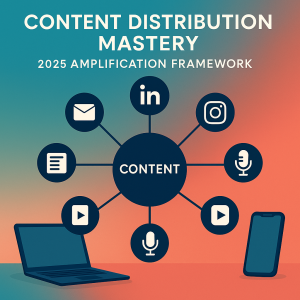
Content Distribution Mastery: 2025 Multi-Channel Amplification Framework
In today’s digital landscape, the sheer volume of content available can be overwhelming. As marketers, we face the challenge of ensuring our messages cut through the noise and reach our target audiences effectively. The key to achieving this lies in mastering a robust content distribution strategy that leverages multiple channels. This article will explore the essential components of a successful multi-channel distribution framework for 2025, focusing on cross-platform syndication, content atomization, and reach optimization.
Understanding the Importance of Multi-Channel Distribution
The Changing Landscape of Content Consumption
The way consumers engage with content has evolved dramatically. Gone are the days when a single blog post or social media update could suffice. Today, audiences are spread across various platforms, each with unique characteristics and user behaviors. To effectively connect with our audience, we must be present where they are, whether that’s on social media, email, podcasts, or other digital touchpoints.
The Need for Strategic Distribution
Simply creating high-quality content is not enough. We must also focus on how we distribute that content. A well-crafted distribution strategy ensures that our messages reach the right people at the right time. This involves understanding the nuances of each platform and tailoring our approach accordingly.
Benefits of a Multi-Channel Approach
Adopting a multi-channel distribution strategy offers several advantages:
Increased Visibility: By being present on multiple platforms, we enhance our chances of being discovered by potential customers.
Enhanced Engagement: Different platforms cater to different audience preferences. By diversifying our content formats, we can engage users more effectively.
Improved Brand Credibility: A consistent presence across various channels builds trust and authority in our brand.
Key Components of a Successful Content Distribution Strategy
1. Audience Understanding
To create an effective distribution strategy, we must first understand our audience. This involves:
Creating Detailed Buyer Personas: Identify who our target customers are, their preferences, and where they spend their time online.
Utilizing Analytics Tools: Leverage tools like Google Analytics and social media insights to gather data on audience behavior and engagement patterns.
2. Content Atomization
Content atomization refers to breaking down larger pieces of content into smaller, more digestible formats. This allows us to maximize the reach of our content across various platforms. Here’s how to implement it:
Identify Core Content: Start with a comprehensive piece, such as a blog post or whitepaper.
Create Multiple Formats: Transform the core content into various formats, such as infographics, videos, social media posts, and podcasts.
Distribute Across Channels: Share these formats on the platforms where your audience is most active.
3. Cross-Platform Syndication
Cross-platform syndication involves sharing content across multiple channels to increase visibility. This can be achieved through:
Social Media Sharing: Post content on platforms like Facebook, Twitter, LinkedIn, and Instagram, tailoring the message for each audience.
Email Marketing: Use newsletters to share valuable content and drive traffic back to your website.
Partnerships and Collaborations: Collaborate with influencers or other brands to reach new audiences through guest posts or co-created content.
4. Reach Optimization
To ensure our content reaches the intended audience, we must optimize our distribution efforts. This includes:
SEO Best Practices: Implementing SEO strategies to improve organic visibility on search engines.
Paid Advertising: Utilizing targeted ads on social media and search engines to amplify reach.
Timing and Frequency: Analyzing data to determine the best times to post content for maximum engagement.
Crafting a Multi-Channel Distribution Plan
Step 1: Set Clear Goals
Before diving into distribution, we must establish clear, measurable goals. These could include:
Increasing website traffic by a certain percentage.
Growing social media followers or engagement rates.
Generating leads through email sign-ups or downloads.
Step 2: Identify Key Channels
Based on our audience research, we should identify the most effective channels for distribution. This may include:
Social Media Platforms: Determine which platforms align with our audience demographics.
Email Marketing: Segment our email list to tailor messages for different audience groups.
Content Sharing Sites: Explore platforms like Medium or LinkedIn for additional exposure.
Step 3: Create a Content Calendar
A content calendar helps us plan and organize our distribution efforts. It should include:
Content Types: Specify what types of content will be shared on each platform.
Posting Schedule: Outline when and how often content will be posted.
Performance Metrics: Define how success will be measured for each piece of content.
Step 4: Monitor and Adjust
Once our distribution plan is in motion, we must continuously monitor its performance. This involves:
Analyzing Engagement Metrics: Track likes, shares, comments, and click-through rates to gauge effectiveness.
A/B Testing: Experiment with different content formats, headlines, and posting times to optimize results.
Adjusting Strategies: Be prepared to pivot based on what the data reveals about audience preferences.
Overcoming Common Challenges in Multi-Channel Distribution
1. Content Overload
With so much content available, it can be challenging to stand out. To combat this, we should focus on:
Quality Over Quantity: Prioritize creating high-quality, valuable content that resonates with our audience.
Unique Value Proposition: Clearly communicate what sets our content apart from competitors.
2. Platform-Specific Nuances
Each platform has its own rules and best practices. To navigate this, we should:
Tailor Content for Each Platform: Adapt our messaging and format to suit the unique characteristics of each channel.
Stay Updated on Trends: Regularly research platform updates and trends to ensure our strategies remain relevant.
3. Resource Limitations
Many businesses face resource constraints when it comes to content creation and distribution. To address this, we can:
Repurpose Existing Content: Maximize the value of our current content by repurposing it for different formats and channels.
Leverage Automation Tools: Utilize tools for scheduling posts and analyzing performance to streamline efforts.
Conclusion: Embracing the Future of Content Distribution
As we move into 2025, mastering a multi-channel content distribution strategy will be essential for success. By understanding our audience, leveraging content atomization, and optimizing our reach through cross-platform syndication, we can ensure our messages resonate with the right people at the right time.
The digital landscape is ever-evolving, and staying ahead requires adaptability and a commitment to continuous learning. By implementing the strategies outlined in this article, we can build a robust content distribution framework that not only enhances visibility but also fosters meaningful connections with our audience.
Are you ready to elevate your content distribution strategy? Let’s embrace the future together and make our mark in the digital world!
Local SEO for Indian SMEs: Dominate Google’s 3-Pack in 2025
In the bustling digital landscape of India, small and medium enterprises (SMEs) face an ever-growing challenge: standing out in local search results. As we approach 2025, the importance of local SEO services has skyrocketed, with Google’s 3-Pack becoming the holy grail for businesses aiming to capture the attention of nearby customers. This comprehensive guide will equip Indian SMEs with cutting-edge strategies to dominate the Google 3-Pack, ensuring their visibility in an increasingly competitive online marketplace.
Table of Contents
Understanding the Google 3-Pack
The Evolution of Local SEO in India
Key Components of Local SEO Success
Google Business Profile Optimization
Leveraging Vernacular Keywords
Building Hyperlocal Citations
Mobile-First Optimization Strategies
Local Content Marketing Tactics
As we embark on this journey to master local SEO, it’s crucial to recognize the unique challenges and opportunities that Indian SMEs face in the digital realm. With over 63 million SMEs contributing significantly to India’s GDP, the competition for local visibility is fierce. However, by implementing the strategies outlined in this guide, your business can rise above the noise and secure a coveted spot in Google’s 3-Pack.
Understanding the Google 3-Pack
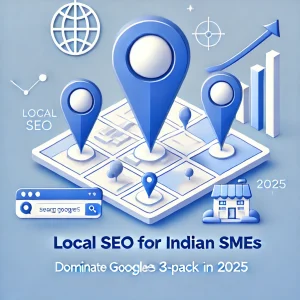
The Google 3-Pack, also known as the local pack, is a prominent feature in search engine results pages (SERPs) that displays the top three local business listings for a given search query. This coveted position offers unparalleled visibility and drives significant traffic to local businesses.
For Indian SMEs, appearing in the 3-Pack can be a game-changer. Studies show that these listings receive up to 44% of clicks for local searches, far outperforming traditional organic results. As we look towards 2025, securing a spot in the 3-Pack will become even more critical for businesses aiming to thrive in their local markets.
Key factors influencing 3-Pack rankings include:
Relevance to the search query
Proximity to the searcher’s location
Prominence of the business online and offline
Understanding these elements is crucial for developing a robust local SEO strategy that can propel your business to the top of local search results.
The Evolution of Local SEO in India
The landscape of local SEO in India has undergone significant transformations in recent years. As we approach 2025, several key trends are shaping the way businesses approach local search optimization:
Mobile-first indexing: With over 600 million smartphone users in India, Google’s shift to mobile-first indexing has profoundly impacted local search rankings.
Voice search optimization: The rise of voice-activated devices and regional language support has made optimizing for conversational queries essential.
Hyperlocal targeting: Businesses are focusing on ultra-specific geographic areas, often down to the neighborhood level.
Integration of AI and machine learning: Search algorithms are becoming more sophisticated, requiring businesses to provide more accurate and comprehensive local data.
As these trends continue to evolve, Indian SMEs must adapt their local SEO strategies to stay ahead of the curve and maintain visibility in the Google 3-Pack.
Key Components of Local SEO Success
To dominate the Google 3-Pack in 2025, Indian SMEs must focus on several critical components of local SEO:
Google Business Profile optimization: Ensuring your GBP listing is complete, accurate, and engaging.
On-page SEO: Optimizing website content, meta tags, and structure for local search queries.
Citation building: Creating consistent NAP (Name, Address, Phone number) citations across the web.
Review management: Actively soliciting and responding to customer reviews.
Local link building: Acquiring high-quality, locally relevant backlinks.
Mobile optimization: Ensuring your website provides an excellent mobile user experience.
Local content creation: Developing content that resonates with your local audience and addresses their specific needs.
By focusing on these key areas, SMEs can significantly improve their chances of appearing in the Google 3-Pack and attracting more local customers.
Google Business Profile Optimization
Your Google Business Profile (GBP) is the cornerstone of local SEO success. As we move towards 2025, optimizing your GBP will become even more crucial for Indian SMEs aiming to dominate the 3-Pack. Here are some essential optimization strategies:
Claim and verify your listing: Ensure you have full control over your GBP by claiming and verifying it through Google’s official process.
Provide comprehensive information: Fill out every relevant field in your profile, including business hours, services offered, and payment methods accepted.
Use high-quality visuals: Upload professional photos and videos that showcase your business, products, and services.
Leverage Google Posts: Regularly share updates, offers, and events through Google Posts to keep your profile fresh and engaging.
Encourage and respond to reviews: Actively solicit customer reviews and respond promptly to both positive and negative feedback.
Utilize Q&A feature: Anticipate common questions and provide detailed answers in the Q&A section of your profile.
Keep information up-to-date: Regularly review and update your GBP information to ensure accuracy and relevance.
By implementing these strategies, you’ll create a robust GBP that not only improves your chances of appearing in the 3-Pack but also provides valuable information to potential customers.
Leveraging Vernacular Keywords
In a linguistically diverse country like India, incorporating vernacular keywords into your local SEO strategy is essential for reaching a wider audience. As we approach 2025, the importance of multilingual optimization will only grow. Here’s how to effectively leverage vernacular keywords:
Conduct thorough keyword research: Use tools like Google Keyword Planner and regional language forums to identify popular local search terms.
Create multilingual content: Develop website content, meta tags, and GBP descriptions in both English and relevant regional languages.
Optimize for voice search: Include long-tail, conversational keywords that reflect how people speak in their local language.
Local SEO for Indian SMEs: Dominate Google’s 3-Pack in 2025
Use transliteration: Incorporate keywords that use English letters to spell out local language terms, as many users search this way.
Localize your content: Adapt your content to reflect local cultural nuances, festivals, and events.
Implement hreflang tags: Use hreflang tags to indicate the language and regional targeting of your web pages to search engines.
By embracing linguistic diversity in your local SEO strategy, you’ll be better positioned to capture the attention of a broader local audience and improve your chances of appearing in the Google 3-Pack.
Building Hyperlocal Citations
Citations play a crucial role in establishing your business’s credibility and improving local search rankings. As we look towards 2025, the focus is shifting towards hyperlocal citations that cater to specific neighborhoods or localities. Here’s how Indian SMEs can build a strong citation profile:
Identify relevant directories: Research and list local business directories, chamber of commerce websites, and industry-specific platforms.
Ensure NAP consistency: Maintain consistent Name, Address, and Phone number information across all citations.
Target hyperlocal platforms: Seek out and list your business on neighborhood-specific websites and community forums.
Leverage social media: Create and maintain profiles on popular social media platforms, ensuring all business information is accurate and up-to-date.
Engage with local influencers: Collaborate with local bloggers or social media influencers to gain mentions and backlinks.
Monitor and manage citations: Regularly audit your citations to ensure accuracy and remove any duplicate or outdated listings.
Utilize structured data markup: Implement schema markup on your website to help search engines understand and display your business information accurately.
By building a robust network of hyperlocal citations, you’ll strengthen your local SEO foundation and improve your visibility in the Google 3-Pack.
Mobile-First Optimization Strategies
With the majority of local searches in India now occurring on mobile devices, optimizing for mobile-first indexing is crucial for dominating the Google 3-Pack. Here are key strategies to ensure your website is mobile-friendly:
Responsive design: Implement a responsive website design that adapts seamlessly to various screen sizes and devices.
Fast loading times: Optimize images, minify code, and leverage browser caching to ensure quick page load speeds on mobile networks.
Simplified navigation: Create an intuitive, easy-to-use mobile navigation menu that allows users to find information quickly.
Local-focused content: Prioritize local content and ensure it’s easily accessible on mobile devices.
Click-to-call functionality: Implement click-to-call buttons for easy contact on mobile devices.
Local SEO for Indian SMEs: Dominate Google’s 3-Pack in 2025
Mobile-friendly forms: Simplify forms and ensure they’re easy to complete on smaller screens.
AMP implementation: Consider using Accelerated Mobile Pages (AMP) for faster loading on mobile devices.
By prioritizing mobile optimization, you’ll not only improve your chances of appearing in the Google 3-Pack but also provide a better user experience for your local customers.
Local Content Marketing Tactics
Creating compelling, locally-relevant content is essential for attracting and engaging your target audience. As we approach 2025, content marketing will play an increasingly important role in local SEO success. Here are effective tactics for Indian SMEs:
Develop location-specific landing pages: Create dedicated pages for each location or service area you target.
Produce local guides and resources: Develop comprehensive guides about your local area, showcasing your expertise and providing value to readers.
Leverage local events and news: Create content around local events, festivals, and news to demonstrate your community involvement.
Use local case studies and testimonials: Showcase success stories from local customers to build trust and credibility.
Incorporate local keywords naturally: Use location-specific keywords throughout your content, but ensure they flow naturally and provide value to readers.
Create video content: Develop video tours of your business, customer testimonials, or local area guides to engage visual learners.
Optimize for featured snippets: Structure your content to increase chances of appearing in featured snippets for local queries.
By implementing these local content marketing tactics, you’ll improve your visibility in local search results and position your business as a trusted local authority.
Conclusion:
Local SEO is a game-changer for Indian SMEs looking to dominate Google’s 3-Pack in 2025. By optimizing your Google Business Profile, leveraging vernacular keywords, and building hyperlocal citations, you can improve visibility, attract more local customers, and stay ahead of the competition. Implement these strategies consistently, monitor your performance, and adapt to changing SEO trends to maximize your business growth.
As we approach 2025, the Social Media Marketing landscape continues to evolve at a breakneck pace. Marketers face an increasingly competitive arena where platform updates, shifting algorithms, and changing consumer behaviors demand constant adaptation. Therefore, adopting innovative strategies is essential to stand out, foster deeper relationships, and drive meaningful interactions in 2025.
7 Game-Changing Social Media Strategies for 2025
The Social Media Ecosystem in Flux
Before exploring specific strategies, it’s crucial to grasp the evolving social media landscape. Notably, major platforms like Meta (previously Facebook) are under regulatory scrutiny in the EU, whereas TikTok’s future in the U.S. remains uncertain. These developments underscore the need for marketers to diversify their social media presence and stay agile in their approach.
As we explore the top social media marketing strategies for 2025, keep in mind that flexibility and adaptability will be key to success in this ever-changing landscape.
1. Navigating the Platform Wars: X, Bluesky, and Threads
The social media platform landscape is undergoing a significant shift, with new players challenging established giants. This section explores the ongoing battle between X (formerly Twitter), Bluesky, and Threads, and how marketers can leverage these platforms effectively.
The Decline of X and the Rise of Alternatives
Ever since Elon Musk acquired Twitter (now rebranded as X) in 2022, the platform has navigated a series of controversies and challenges. These issues have led to a notable exodus of users and advertisers, creating opportunities for alternative platforms to gain traction.
According to recent data, X lost approximately 2.7 million active users in the United States within just two months following the 2024 U.S. election. This decline has opened the door for emerging platforms like Bluesky and Threads to capture market share.
Bluesky: A Decentralized Alternative
Developed by X’s founder, Jack Dorsey, Bluesky has emerged as a promising alternative for users seeking a platform similar to X. With its decentralized structure and user-friendly interface, Bluesky has attracted nearly 2.5 million users during the same period that X experienced its decline.
Key features of Bluesky include:
Decentralized architecture
Short-form messaging capabilities
Support for images and videos
Growing adoption by major brands and media outlets
Threads: Meta’s Contender
While Bluesky has garnered significant attention, Meta’s Threads platform has made even more impressive gains since its launch in 2023. With a current user base of 275 million, Threads benefits from its connection to the Instagram ecosystem and Meta’s extensive resources.
Threads is rapidly evolving, with new features being added regularly:
Customizable feeds
Algorithm-driven trending topics
List-style content (coming soon)
By staying agile and adapting to the changing platform landscape, marketers can ensure their brands remain visible and engaging across the social media spectrum.
2. Harnessing the Power of AI in Social Media Marketing
Artificial Intelligence (AI) is revolutionizing social media marketing, offering unprecedented opportunities for efficiency, personalization, and scale. In 2025, AI will be an indispensable tool for marketers looking to stay competitive in the digital landscape.
The Impact of AI on Social Media Marketing
AI is transforming various aspects of social media marketing, including:
Content creation
Data analysis
Personalization
Customer service
Advertising performance
According to Statista, marketers report several key benefits of using AI in social media marketing:
38% cite increased efficiency as the top benefit
34% appreciate easier idea generation
33% note increased content production
AI-Powered Content Creation
AI tools like ChatGPT, Jasper, and Midjourney are revolutionizing content creation for social media. These tools can help generate text, images, videos, and even create virtual influencers. However, it’s crucial to remember that the quality of AI-generated content depends and heavily on the input provided.
To maximize the effectiveness of AI-generated content:
Use custom prompts with specific instructions
Provide clear guidelines on tone, voice, and style
Combine AI-generated ideas with human creativity and expertise
Continuously refine and improve your prompts based on results
By embracing AI in your social media marketing efforts, you can enhance efficiency, improve targeting, and drive better results for your brand in 2025 and beyond.
3. The Rise of Employee-Generated Content (EGC)
In an era where authenticity is paramount, Employee-Generated Content (EGC) is emerging as a powerful tool for building trust and showcasing brand personality. This section explores the growing importance of EGC and how marketers can leverage it effectively in 2025.
The Value of Authenticity in Marketing
According to Edelman’s Trust Barometer, 81% of consumers consider trust in a brand crucial for making purchase decisions. This heightened emphasis on authenticity has led to a shift in marketing strategies, with brands increasingly turning to their employees as valuable content creators and brand ambassadors.
Understanding Employee-Generated Content
EGC refers to any form of content created by employees that represents or promotes the company. This can include:
To effectively incorporate EGC into your social media marketing:
Develop clear guidelines for employee participation
Provide training and resources for content creation
Encourage diverse voices and perspectives
Create a system for content approval and curation
Recognize and reward employee contributions
Monitor and measure the impact of EGC on brand metrics
By embracing Employee-Generated Content, brands can build stronger connections with their audience, showcase their company culture, and create a more authentic online presence in 2025.
4. The Evolving Role of Hashtags in Social Media Strategy
As we approach 2025, the effectiveness and relevance of hashtags in social media marketing are undergoing significant changes. This section explores the shifting landscape of hashtag usage and provides strategies for adapting to these changes.
The Decline of Hashtag Effectiveness
Traditionally, hashtags have been a crucial tool for increasing content discoverability and engagement on social media platforms. However, recent trends suggest a decline in their effectiveness, making it crucial for businesses to adapt and explore innovative approaches to sustain engagement and visibility.
Increased spam and clutter associated with popular hashtags
Changes in platform algorithms that prioritize other factors for content discovery
User fatigue and decreased engagement with hashtag-heavy content
Platform-Specific Changes
Different social media platforms are approaching hashtags in varying ways:
Instagram: Removed the option to follow hashtags and no longer displays hashtag-related posts in the main feed
Twitter (X): Still utilizes hashtags, but their impact on reach has diminished
TikTok: Relies more on content-based algorithms for discovery, reducing the importance of hashtags
The Rise of Keyword Optimization
As hashtags become less effective, keyword optimization is gaining importance:
Platforms are increasingly able to understand and categorize content based on natural language
Users are turning to social media platforms (especially TikTok) as search engines
Incorporating relevant keywords in captions and descriptions can improve content discoverability
Strategies for Adapting to the Changing Hashtag Landscape
Focus on high-quality, engaging content rather than relying solely on hashtags
Use platform-specific features for content discovery (e.g., location tags, mentions)
Incorporate relevant keywords naturally into your content and captions
Monitor platform updates and adjust your strategy accordingly
Experiment with a mix of branded and general hashtags to find the right balance
Utilize analytics to track the performance of content with and without hashtags
As we look ahead to 2025, short-form video content continues to dominate the social media landscape. This section explores the reasons behind this trend and provides strategies for leveraging short-form video in your marketing efforts.
The Rise of Short-Form Video
As a result of the rising popularity of platforms like TikTok, Instagram Reels, and YouTube Shorts, short-form video content has seen an unprecedented surge. Key statistics highlight this trend:
Meta reports that 60% of time spent on Facebook and Instagram is now video-based
TikTok has surpassed 1 billion monthly active users globally
YouTube Shorts garners over 50 billion daily views
Why Short-Form Video Works
Aligns with decreasing attention spans
Provides quick, engaging entertainment
Easily shareable across platforms
Allows for creative storytelling in bite-sized formats
Appeals to mobile-first users
Types of Short-Form Video Content
Behind-the-scenes glimpses
Product demonstrations
User-generated content compilations
Quick tips and tutorials
Customer testimonials
Trending challenge participation
Brand storytelling snippets
Best Practices for Short-Form Video Marketing
Maintain brand consistency across videos
Experiment with different styles and formats
Encourage employee participation for authentic content
Analyze performance metrics to refine your strategy
Cross-promote videos across multiple platforms
Engage with your audience through comments and responses
Stay up-to-date with platform-specific trends and features
By embracing short-form video content and adapting to platform-specific best practices, marketers can effectively capture audience attention and drive engagement in the fast-paced social media landscape of 2025.
As we approach 2025, there’s a noticeable shift in social media marketing strategies from influencer-focused campaigns to more customer-centric content. This section explores the reasons behind this trend and provides insights on how brands can leverage customer content effectively.
The Evolution of Influencer Marketing
While influencer marketing remains a valuable strategy, its effectiveness has been challenged by:
Oversaturation of influencer content
Concerns about authenticity and trust
High costs associated with top-tier influencers
Difficulty in measuring true ROI
The Rise of Customer-Centric Content
Brands are increasingly recognizing the power of their own customers as content creators and brand advocates. This shift is driven by:
Growing emphasis on authenticity in marketing
Desire for diverse perspectives and real-world experiences
Cost-effectiveness compared to traditional influencer campaigns
Improved technology for user-generated content curation
Strategies for Leveraging Customer Content
Create branded hashtags for user-generated content
Host contests and challenges to encourage content creation
Feature customer stories and testimonials prominently
Develop a customer advocacy program
Integrate user-generated content into product pages and marketing materials
Engage with and respond to customer content across platforms
By embracing customer-centric content, brands can build stronger connections with their audience, showcase authentic experiences, and create a more engaging and trustworthy online presence in 2025 and beyond.
7. Navigating Security and Regulation in Social Media Marketing
As we approach 2025, the landscape of social media marketing is increasingly shaped by concerns over security, privacy, and regulation. This section explores the key challenges and opportunities in this evolving environment, providing strategies for marketers to navigate these complex issues effectively.
The Changing Regulatory Landscape
Recent years have seen significant developments in social media regulation:
Increased scrutiny of platform practices, particularly regarding user data and privacy
New legislation aimed at protecting younger users
Ongoing debates about content moderation and platform responsibility
Growing concerns about the impact of social media on mental health
Key Regulatory Developments
Australia’s Proposed Ban on Social Media for Under-16s
Potential fines of up to A$50m for non-compliant platforms
Implementation expected by 2026
Implications for marketing strategies targeting younger demographics
European Union Investigations
Ongoing probes into Facebook and Instagram’s impact on children’s mental health
Potential for stricter regulations on targeted advertising and content algorithms
Challenges for Marketers
Adapting to changing platform policies and features
Ensuring compliance with evolving regulations across different markets
Balancing personalization with privacy concerns
Maintaining brand safety in an increasingly scrutinized environment
Adapting strategies for age-restricted platforms or features
Key Takeaways for Marketers
Prioritize compliance and ethical practices in all social media marketing efforts
Develop flexible strategies that can adapt to changing regulations
Invest in building direct relationships with your audience
Stay informed about regulatory developments and platform policy changes
Collaborate with legal and compliance teams to ensure adherence to regulations
By proactively addressing security and regulatory concerns, marketers can build trust with their audience, mitigate risks, and position their brands for success in the evolving social media landscape of 2025 and beyond.
Conclusion: Embracing the Future of Social Media Marketing
As we’ve explored throughout this article, the social media marketing landscape of 2025 presents both exciting opportunities and significant challenges. By staying informed about emerging trends, adapting to new technologies, and prioritizing authentic connections with audiences, marketers can position their brands for success in this dynamic environment.
Diversify your platform strategy to navigate the evolving landscape of social networks
Leverage AI tools to enhance content creation, personalization, and advertising effectiveness
Embrace employee-generated content to showcase authenticity and build trust
Adapt your hashtag strategy and focus on overall content quality and discoverability
Prioritize short-form video content across platforms to capture audience attention
Shift towards customer-centric content strategies to build stronger community engagement
Navigate security and regulatory challenges proactively to ensure compliance and build trust
As you implement these strategies, remember that the core principles of effective marketing remain constant: understand your audience, deliver value, and build meaningful connections. By combining these timeless principles with the latest tools and techniques, you’ll be well-equipped to thrive in the social media marketing landscape of 2025 and beyond.
Stay agile, keep learning, and don’t be afraid to experiment with new approaches. The future of social media marketing is bright for those who are willing to embrace change and innovate continuously.
Unlocking Success: Top 7 Benefits of SEO Marketing for Your Business Growth
Understanding SEO Marketing: A Brief Overview
Search Engine Optimization (SEO) marketing has become an indispensable tool for businesses aiming to thrive in the digital landscape. As we delve into the world of SEO, it’s crucial to understand its fundamental principles and how they can propel your business to new heights.
At its core, SEO marketing is the practice of optimizing your website and online content to improve its visibility in search engine results pages (SERPs). By implementing various strategies and techniques, we can enhance our website’s ranking for relevant keywords, making it easier for potential customers to find us when they’re searching for products or services related to our business.
The beauty of SEO lies in its holistic approach to improving your online presence. It encompasses various elements, including on-page optimization, content creation, link building, and technical improvements. By focusing on these aspects, we can create a robust online foundation that not only attracts more visitors but also converts them into loyal customers.
Boosting Online Visibility: The Primary Advantage of SEO
One of the most significant benefits of SEO marketing is its ability to dramatically increase your online visibility. In today’s digital age, where consumers turn to search engines for almost everything, being easily discoverable can make or break a business.
When we implement effective SEO strategies, we’re essentially positioning our business at the forefront of our industry in the digital realm. By optimizing our website for relevant keywords and providing valuable content, we increase our chances of appearing on the first page of search results. This visibility is crucial, as studies have shown that the majority of users rarely venture beyond the first page when looking for information or products.
Moreover, increased visibility through SEO doesn’t just mean more traffic; it means more targeted traffic. By focusing on keywords and topics relevant to our business, we attract users who are actively searching for what we offer. This targeted approach leads to higher conversion rates and a better return on investment compared to traditional marketing methods.
Cost-Effective Marketing: How SEO Saves Your Budget
In the realm of digital marketing, SEO stands out as one of the most cost-effective strategies available. Unlike paid advertising, where we need to continually invest to maintain visibility, SEO provides long-term benefits that can significantly reduce our marketing costs over time.
Once we’ve established a strong SEO foundation, our website can continue to attract organic traffic without the need for ongoing paid campaigns. This sustainable approach allows us to allocate our marketing budget more efficiently, focusing on other areas of growth while our SEO efforts continue to drive results.
Furthermore, the targeted nature of SEO means we’re not wasting resources on reaching uninterested audiences. By focusing on users who are actively searching for our products or services, we ensure that our marketing efforts are always directed towards potential customers, maximizing our return on investment.
Building Credibility and Trust Through SEO Strategies
In today’s competitive business landscape, establishing credibility and trust with our audience is paramount. SEO plays a crucial role in this aspect by helping us position our brand as an authority in our industry.
When our website consistently appears at the top of search results for relevant queries, it sends a strong signal to users that we are a reputable and trustworthy source of information. This perception is further reinforced when we provide high-quality, informative content that addresses our audience’s needs and questions.
Moreover, SEO encourages us to improve various aspects of our website, such as user experience, loading speed, and mobile responsiveness. These improvements not only help with search engine rankings but also contribute to a positive user experience, further enhancing our credibility in the eyes of potential customers.
Enhancing User Experience: The Hidden Benefit of SEO
While many associate SEO primarily with improving search engine rankings, its benefits extend far beyond that. One of the often-overlooked advantages of SEO is its positive impact on user experience.
To succeed in SEO, we need to focus on creating a website that is not only search engine friendly but also user-friendly. This means improving site navigation, ensuring fast loading times, and optimizing for mobile devices. All these factors contribute to a better user experience, which in turn leads to higher engagement, longer time spent on site, and increased likelihood of conversions.
Furthermore, the content-driven nature of SEO encourages us to create valuable, informative content that addresses our audience’s needs and questions. By providing this valuable information, we’re not just improving our search rankings; we’re also establishing ourselves as a helpful resource for our customers, fostering loyalty and trust.
Staying Ahead of Competition with Effective SEO Tactics
In today’s digital marketplace, staying ahead of the competition is crucial for business success. SEO provides us with a powerful tool to outperform our rivals and capture a larger share of the market.
By implementing effective SEO strategies, we can:
Identify and target valuable keywords: This allows us to capture traffic that our competitors might be missing.
Analyze competitor strategies: SEO tools enable us to study our competitors’ tactics and find opportunities to outperform them.
Continuously improve our online presence: The ever-evolving nature of SEO encourages constant refinement and improvement of our digital strategy.
Moreover, as we climb the search rankings and increase our visibility, we’re effectively pushing our competitors down. This not only increases our market share but also makes it more challenging for new competitors to enter the space and gain traction.
Long-Term Results: The Sustainable Impact of SEO Marketing
One of the most compelling benefits of SEO marketing is its ability to deliver long-term, sustainable results. Unlike paid advertising, which stops delivering traffic the moment we stop paying, SEO continues to work for us long after the initial optimization efforts.
When we invest in SEO, we’re building a solid foundation for our online presence. As our website’s authority grows and our content library expands, we create a compounding effect where each new piece of content builds upon the success of previous efforts. This leads to:
Furthermore, the insights we gain from our SEO efforts can inform other areas of our marketing strategy, creating a synergistic effect that enhances our overall digital presence.
Targeted Traffic: Attracting Quality Leads Through SEO
One of the most valuable aspects of SEO marketing is its ability to attract highly targeted traffic to our website. Unlike broad-reaching advertising methods, SEO allows us to connect with users who are actively searching for products or services related to our business.
This targeted approach offers several advantages:
Higher conversion rates: Users finding us through search are more likely to be interested in what we offer, leading to better conversion rates.
Improved ROI: By focusing on users with high intent, we maximize the return on our marketing investment.
Better user engagement: Targeted visitors are more likely to spend time exploring our site and interacting with our content.
By tailoring our SEO strategy to attract these quality leads, we can significantly improve the efficiency of our marketing efforts and drive sustainable business growth.
Measuring Success: Analytics and ROI in SEO Marketing
One of the great advantages of SEO marketing is the ability to measure and analyze our efforts with precision. Through various analytics tools, we can track key performance indicators (KPIs) that provide valuable insights into the success of our SEO strategies.
Identify what’s working and what needs improvement
Make data-driven decisions to optimize our strategy
Demonstrate the ROI of our SEO efforts to stakeholders
This ability to measure and quantify results not only helps us refine our approach but also justifies further investment in SEO as we can clearly demonstrate its impact on our business growth.
Implementing SEO: Steps to Kickstart Your Business Growth
Now that we’ve explored the numerous benefits of SEO marketing, it’s time to take action and implement these strategies in our own business. Here’s a step-by-step guide to get started:
Conduct a comprehensive website audit: Identify technical issues, content gaps, and areas for improvement.
Perform keyword research: Discover the terms and phrases your target audience is using to find businesses like yours.
Optimize on-page elements: Improve title tags, meta descriptions, headers, and content to align with your target keywords.
Create high-quality, valuable content: Develop a content strategy that addresses your audience’s needs and questions.
Build high-quality backlinks: Develop a link-building strategy to increase your website’s authority and credibility.
Improve technical SEO: Ensure your website is fast, mobile-friendly, and easy for search engines to crawl and index.
Monitor and analyze results: Regularly review your analytics to track progress and identify areas for improvement.
By following these steps and consistently refining our approach, we can harness the power of SEO to drive sustainable business growth and outperform our competitors in the digital landscape.
Ready to unlock the full potential of your business through SEO marketing? Don’t let your competitors leave you behind in the digital race. Take the first step towards sustainable growth by implementing these SEO strategies today. If you need expert guidance, our team of SEO professionals is here to help. Contact us now for a free consultation and let’s create a customized SEO plan that will propel your business to new heights. Your success story starts with a single click – don’t wait, act now!
Conclusion
In conclusion, effective manual accessibility testing is vital for creating inclusive digital experiences. By combining human judgment with automated tools, organizations can identify and address nuanced accessibility issues that automated systems may overlook. This dual approach not only enhances compliance with accessibility standards but also significantly improves the user experience for individuals with disabilities. Key Points to Remember:
Human-Centric Evaluation: Manual testing allows for a deeper understanding of user interactions, ensuring that accessibility features are contextually appropriate and functional.
Comprehensive Preparation: Thorough preparation—including defining the scope, gathering tools, and creating checklists—sets the stage for successful testing.
Diverse User Perspectives: Considering various user personas ensures that testing addresses the needs of individuals with different disabilities.
Detailed Documentation: Keeping meticulous records of findings helps prioritize issues and facilitates communication with developers for effective remediation.
Continuous Improvement: Accessibility testing is an ongoing process. Regular assessments and updates are essential to maintain an inclusive digital environment.
By prioritizing manual accessibility testing, organizations can foster a culture of inclusivity and ensure that their digital products are accessible to all users, ultimately enriching the online experience for everyone.
5 Powerful Lead Generation Strategies Every Business Needs in 2025
In today’s digital landscape, generating high-quality leads is the lifeblood of any thriving business. As we navigate through 2024, the importance of effective lead generation strategies cannot be overstated. With the right approach, businesses can attract potential customers, nurture relationships, and ultimately drive growth and revenue.
In this comprehensive guide, we’ll explore five cutting-edge lead generation strategies that every business should consider implementing. These tactics have been proven to yield results and can be adapted to suit various industries and business models. By the end of this article, you’ll have a clear roadmap for enhancing your lead generation efforts and staying ahead of the competition.
Let’s dive into the strategies that will help you capture more qualified leads and transform your business in 2024 and beyond.
1. Optimize Your Landing Pages for Conversion
In the digital age, your landing pages serve as the front door to your business. They’re often the first point of contact between your brand and potential customers, making their optimization crucial for lead generation success.
When a visitor lands on your page, you have mere seconds to capture their attention and convince them to take action. A well-designed landing page can be the difference between a bounced visitor and a qualified lead. Here’s how to make those crucial first moments count:
Craft compelling headlines that immediately communicate value
Use high-quality, relevant images that support your message
Ensure your page loads quickly on all devices (aim for under 3 seconds)
Implement a clean, uncluttered design that guides the eye to key elements
To transform visitors into leads, your landing pages need to be more than just visually appealing. They must be strategically crafted to encourage action. Consider incorporating these elements:
Clear and concise value propositions that address user pain points
Trust indicators such as customer testimonials, security badges, and industry awards
A prominent and compelling call-to-action (CTA) that stands out visually
Minimal form fields to reduce friction (ask only for essential information)
A sense of urgency or scarcity to prompt immediate action
Mobile Optimization: A Non-Negotiable Factor
With mobile devices accounting for over half of all web traffic, ensuring your landing pages are mobile-friendly is no longer optional—it’s essential. Mobile optimization involves:
Responsive design that adapts to various screen sizes
Touch-friendly buttons and form fields
Simplified navigation for smaller screens
Compressed images to maintain fast load times on mobile networks
A/B Testing for Continuous Improvement
The key to landing page success lies in continuous refinement. Implement A/B testing to compare different versions of your pages and identify what resonates best with your audience. Test elements such as:
Headline variations
CTA button colors and text
Form length and field types
Page layout and design elements
By systematically testing and optimizing your landing pages, you can incrementally improve your conversion rates and generate more leads over time.
2. Leverage Content Marketing to Attract and Nurture Leads
Content marketing has emerged as a powerhouse strategy for lead generation, offering businesses a way to attract, engage, and convert prospects through valuable information and insights.
The Content Marketing Funnel
Understanding the content marketing funnel is crucial for creating a strategy that guides leads from awareness to decision. Let’s break it down:
Top of the funnel (TOFU): Awareness stage content
Blog posts addressing common industry questions
Infographics highlighting interesting statistics
Social media posts sharing quick tips and insights
Middle of the funnel (MOFU): Consideration stage content
In-depth guides and whitepapers
Case studies showcasing your solutions
Webinars diving deep into specific topics
Bottom of the funnel (BOFU): Decision stage content
Product comparisons and buying guides
Free trials or demos
Customer testimonials and success stories
Creating Content That Converts
To generate leads effectively, your content must provide genuine value while strategically guiding readers towards your offerings. Here are key principles to follow:
Address your audience’s pain points and challenges directly
Offer actionable advice and solutions they can implement
Incorporate relevant keywords to improve SEO and attract organic traffic
Use a mix of content formats to cater to different learning preferences
Include clear calls-to-action (CTAs) that lead to next steps or offers
The Power of Gated Content
Gated content—valuable resources offered in exchange for contact information—can be a goldmine for lead generation. Consider creating:
Comprehensive e-books on industry trends
Exclusive research reports with original data
Templates or tools that simplify complex processes
When offering gated content, ensure the perceived value justifies the “cost” of providing personal information.
Content Distribution and Promotion
Creating great content is only half the battle; you need to get it in front of your target audience. Implement a multi-channel distribution strategy:
Share content across your social media platforms
Leverage email marketing to distribute content to your subscriber list
Engage in guest posting on relevant industry blogs
Utilize paid promotion for high-value content pieces
Remember, the key to content marketing success is consistency. Develop a content calendar to ensure regular publication and maintain audience engagement.
3. Implement Email Marketing Automation
Email marketing remains one of the most effective channels for lead nurturing and conversion. By implementing automation, businesses can deliver personalized, timely messages at scale, significantly boosting their lead generation efforts.
Building Your Email List
Before you can leverage email marketing, you need a robust list of subscribers. Here are strategies to grow your email list organically:
Offer valuable lead magnets in exchange for email addresses
Use exit-intent popups to capture leaving visitors
Include sign-up forms on high-traffic pages of your website
Promote your newsletter on social media platforms
Run contests or giveaways that require email submission
Segmentation for Personalized Experiences
Not all leads are created equal. Segmenting your email list allows you to deliver more relevant content to different groups. Consider segmenting based on:
Demographics (age, location, job title)
Behavioral data (website interactions, purchase history)
Position in the sales funnel
Content preferences or interests
Crafting Effective Email Sequences
Automated email sequences can guide leads through the buyer’s journey with minimal manual effort. Here are key sequences to consider:
Welcome series: Introduce new subscribers to your brand and offerings
Lead nurturing sequence: Provide value and build trust over time
Re-engagement campaign: Reactivate dormant leads
Abandoned cart recovery: Remind prospects of items left in their cart
Personalization and Dynamic Content
Leverage the power of personalization to make your emails more engaging:
Use the recipient’s name in the subject line and email body
Tailor content based on past interactions or preferences
Implement dynamic content blocks that change based on user data
Measuring and Optimizing Email Performance
To continually improve your email marketing efforts, track key metrics such as:
Open rates
Click-through rates (CTR)
Conversion rates
Unsubscribe rates
Use A/B testing to optimize various elements of your emails, including subject lines, send times, and CTAs.
4. Harness the Power of Social Media Marketing
Social media platforms offer unprecedented opportunities for businesses to connect with potential leads, build brand awareness, and drive conversions.
Choosing the Right Platforms
Not all social media platforms are created equal when it comes to lead generation. Focus your efforts on platforms where your target audience is most active. Consider:
LinkedIn for B2B lead generation
Instagram and Pinterest for visual products
Facebook for broad consumer reach
Twitter for real-time engagement and customer service
Creating Engaging Social Media Content
To capture attention and generate leads on social media, your content needs to stand out. Here are content ideas that drive engagement:
Live videos addressing common questions or demonstrating products
Infographics presenting industry data or tips
Contests or giveaways that encourage sharing and tagging
Leveraging Paid Social Advertising
While organic reach can be limited, paid social advertising offers powerful targeting options to reach potential leads. Consider:
Facebook Lead Ads for collecting lead information directly on the platform
LinkedIn Sponsored InMail for personalized outreach
Twitter Promoted Tweets to amplify your best-performing content
Social Listening and Engagement
Proactive engagement can turn social media followers into leads. Implement social listening tools to:
Monitor brand mentions and industry keywords
Identify and respond to customer questions or concerns
Join relevant conversations to showcase your expertise
Measuring Social Media ROI
To ensure your social media efforts are contributing to lead generation, track metrics such as:
Follower growth rate
Engagement rates (likes, comments, shares)
Click-through rates on posts with CTAs
Conversion rates from social traffic
Regularly analyze these metrics to refine your social media strategy and focus on tactics that drive the best results.
5. Utilize Chatbots and AI for Real-Time Lead Engagement
As technology advances, chatbots and AI-powered tools have become invaluable assets for lead generation, offering 24/7 engagement and personalized interactions at scale.
Conversational marketing, facilitated by chatbots, allows businesses to engage with website visitors in real-time, answering questions and guiding them towards conversion. Benefits include:
Instant responses to visitor inquiries
Qualification of leads through targeted questions
Personalized product recommendations
Scheduling of demos or consultations
Implementing Chatbots on Your Website
To effectively use chatbots for lead generation:
Determine the primary goals for your chatbot (e.g., lead qualification, customer support)
Choose a chatbot platform that integrates with your existing tools
Design conversation flows that guide users towards your desired outcomes
Craft a personality for your chatbot that aligns with your brand voice
Implement the chatbot on high-traffic pages of your website
AI-Powered Lead Scoring and Qualification
Artificial intelligence can analyze vast amounts of data to identify your most promising leads. AI-powered lead scoring considers factors such as:
Demographic information
Behavioral data (website visits, content interactions)
Engagement with marketing materials
Social media activity
By prioritizing high-scoring leads, your sales team can focus their efforts on prospects most likely to convert.
Personalized Content Recommendations
AI can analyze user behavior to recommend relevant content, products, or services in real-time. This level of personalization can significantly increase engagement and lead conversion rates.
Continuous Learning and Optimization
One of the key advantages of AI-powered tools is their ability to learn and improve over time. Regularly review chatbot conversations and AI-generated insights to:
Identify common questions or pain points
Refine conversation flows for better user experience
Adjust lead scoring models based on actual conversion data
By leveraging chatbots and AI, businesses can provide round-the-clock lead engagement, improve lead quality, and streamline the conversion process.
Conclusion: Integrating Strategies for Maximum Impact
As we’ve explored, effective lead generation in 2024 requires a multi-faceted approach that leverages both tried-and-true methods and cutting-edge technologies. By optimizing landing pages, creating valuable content, implementing email automation, harnessing social media, and utilizing AI-powered tools, businesses can create a robust lead generation ecosystem that drives growth and success.
Remember, the key to successful lead generation lies not just in implementing these strategies individually, but in integrating them into a cohesive, data-driven approach. Regularly analyze your results, refine your tactics, and stay abreast of emerging trends to ensure your lead generation efforts remain effective in an ever-evolving digital landscape.
By consistently applying these strategies and adapting to your audience’s needs and preferences, you’ll be well-positioned to attract, engage, and convert high-quality leads, fueling your business’s growth in 2024 and beyond.